


If you are researching building a pool in Raleigh, NC, you have probably already made up your mind that you want one. The real question at this point is not whether to build. It is how to do it right, without losing a season or spending more than you planned because of things nobody told you upfront.
Raleigh and Wake County come with their own soil conditions, climate patterns, permitting requirements, and HOA rules that make pool construction here different from what a general national guide will tell you. Currin Outdoor Living has designed and built custom pools throughout Raleigh, Cary, Apex, Wake Forest and the greater Triangle for years. These are the nine things every homeowner should understand before signing a contract.
1. The Best Time to Start Is Not Summer
Most homeowners start thinking about a pool in April or May, right when the weather turns warm. By that point, every reputable pool builder in Raleigh already has a full calendar stretching well into next year.
North Carolina's Piedmont region has a natural swim season that runs roughly from May through September. But construction does not need to wait for warm weather. In fact, the opposite is true.
If you want to be swimming by Memorial Day, the time to sign a contract and start your design is the fall or winter before that, not the spring before. This is one of the most avoidable scheduling mistakes homeowners make. You can learn more about what the design process looks like on our pool design page.
2. Your HOA May Have More Control Over This Than You Think
A large share of Raleigh-area neighborhoods, from North Raleigh to Cary, Apex, and Wake Forest, are governed by a homeowners association with an Architectural Review Committee, or ARC. Before you fall in love with a specific design, find out what your HOA actually allows.
Under North Carolina's Planned Community Act, HOAs already have authority over how and where you can build on your property. North Carolina legislators have also been working on proposed reforms through House Bill 444, which, if passed, would require HOAs to respond to architectural review requests including pool permits within 90 days, provide a written explanation for any denial, and give homeowners a clear path to reconsideration. As of July 2026, this bill has not yet been signed into law and is still moving through the NC legislature, but it represents a significant direction for homeowner rights in the state.
What HOAs can legitimately control right now includes fence style and height, pool equipment placement, screening and landscaping requirements, and setback distances from property lines beyond what the county requires. Some associations also require a drainage plan if your lot sits uphill from a neighbor's property.
Get your HOA's architectural guidelines in writing before any design work starts. A builder who works regularly with local HOAs, like our team, can help translate your association's requirements into a design that gets approved cleanly rather than sent back for revisions. Check which areas we work in on our service areas page.
3. Backyard Access Can Make or Break Your Budget
Before you get attached to a pool shape, walk your side yard with a tape measure. Heavy equipment like excavators, concrete trucks, and cranes for fiberglass shells needs a real, clear path into the backyard.
Some of the most common access issues in established Raleigh neighborhoods:
• Narrow side yard gates, which is common in older Raleigh homes that were built long before pools were popular
• Mature trees or root systems close to the path equipment needs to travel
• Retaining walls, fences, or HVAC units blocking the most direct route
• Steep grade changes between the street and the backyard, which you see a lot on rolling lots throughout North Raleigh and Wake Forest
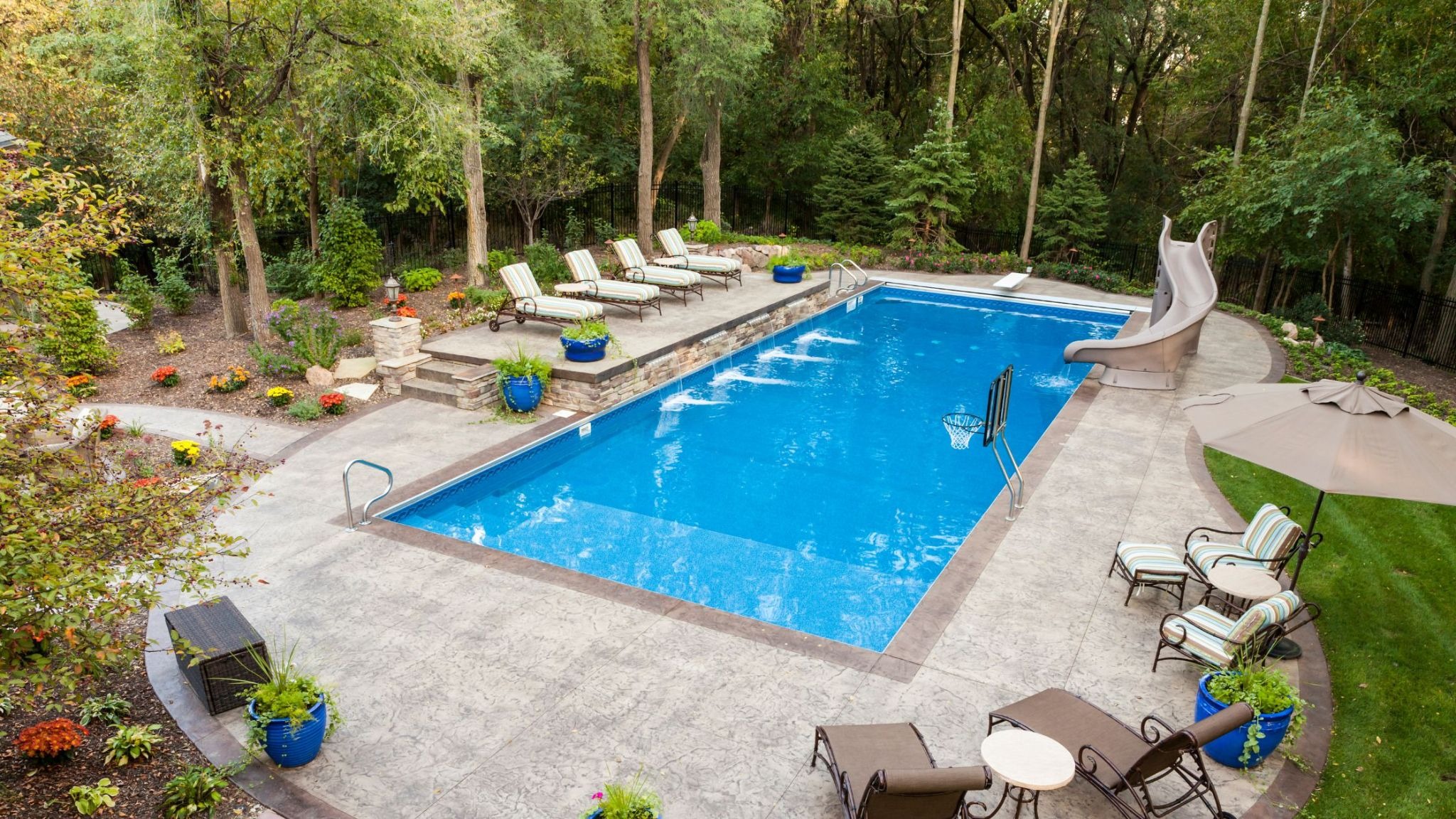
Limited access does not mean a pool is out of the question. It usually means specialized equipment, hand-digging in tight sections, or temporarily removing part of a fence or landscape. All of that affects cost and timeline, which is why a site walk with your builder before the design is finalized is so important. This is a standard part of how we evaluate every property during our pool building consultation.
4. Wake County's Clay Soil Changes How Your Pool Gets Built
Raleigh sits on a mix of soil types, including Cecil sandy loam and Wake loamy sand in some areas, with dense red clay throughout much of the county. Clay is notorious for two things: Holding water and shifting over time.
Here is why that matters for your pool project:
Drainage becomes a structural issue, not just cosmetic. Water that is not routed away from the pool shell and decking creates hydrostatic pressure beneath the structure over time. That pressure leads to cracking or shifting, which is expensive to fix after the fact.
Sloped lots often need engineered retaining walls. Much of Raleigh's topography rolls rather than sitting flat, and a pool on a graded lot may need a structural wall to keep the shell level and stable. This is a real cost factor to plan for early rather than discover once construction is underway.
Soil testing before design matters. It lets your builder engineer the right foundation, drainage, and backfill approach from day one instead of retrofitting a solution later.

An experienced local builder designs for Piedmont clay from the start. This is one of the biggest differences between a national pool franchise and a builder who has worked in Raleigh's specific ground conditions for years. You can see how we approach this on our process page.
5. A Realistic Budget Includes More Than the Pool Shell
When homeowners research cost online, the numbers they find often reflect just the basic shell, not a finished, livable backyard. For a quality custom project in the Raleigh market, a realistic budget accounts for:
• The pool shell itself, whether concrete/gunite, fiberglass, or vinyl. Each comes with different cost, customization options, and long-term durability trade-offs.
• A code-required safety barrier, NC law requires a permanent barrier at least 48 inches tall around any pool holding more than 24 inches of water. Quality fencing is a real line item.
• Decking and hardscape, the patio or paver surface surrounding the pool often represents 20 to 30 percent of a project's total visual impact and budget.
• Retaining walls or drainage work, if your lot has any grade at all.
• Equipment, automation, heating, and lighting for year-round usability.
• Landscaping to finish the space and remove any evidence that heavy machinery was ever in your backyard.
Homeowners who plan only for the hole in the ground are consistently surprised when the rest of the costs come in. Homeowners who plan the entire outdoor living space, which means the pool, patio, outdoor kitchen, fire feature, and landscaping from the start, get a dramatically better result for a comparable total investment. Everything is designed and priced as one cohesive project rather than four disconnected ones. Browse our outdoor kitchen and fire feature pages to see what a full build looks like.
6. The Construction Timeline Has More Steps Than Most People Expect
A lot of homeowners picture pool construction as digging a hole and filling it with water. In reality, a custom pool build in Wake County moves through a series of phases, each of which takes time and is subject to weather, inspections, and material delivery schedules:
1. Design and engineering, including site evaluation, 3D renderings, and structural planning.
2. Permitting, which includes building, electrical, and sometimes plumbing and zoning review.
3. Excavation, shaped to your specific design and soil conditions.
4. Steel and plumbing rough-in, the structural skeleton and all circulation lines.
5. Shell construction, gunite/shotcrete application for concrete pools or shell placement for fiberglass.
6. Decking, coping, and hardscape, tying the pool visually into the rest of the backyard.
7. Tile, interior finish, and equipment installation.
8. Fence/barrier installation and final inspections.
9. Startup, water chemistry balancing, and homeowner orientation.
Depending on the pool type and project complexity, the full process runs anywhere from roughly six weeks for a simpler fiberglass installation to several months for a fully custom concrete pool with retaining walls, an outdoor kitchen, and complete landscape work. Weather, inspection scheduling, and material lead times all play a role. Starting in the off-season builds in a healthy buffer against all of those variables.
7. Not All Pool Builders Offer the Same Thing
Raleigh's pool market includes national franchise installers, small regional pool-only contractors, and full design-build firms. The difference matters more than most homeowners realize before they start comparing quotes.
Questions worth asking any builder before you sign:
• Do you design the pool and the surrounding backyard together, or just the pool?
• Who pulls the permits, and how many Wake County and Raleigh pool projects have you completed?
• Is drainage and grading engineered specifically for my lot, or is it a standard template?
• What is included in the contract price versus billed as an allowance or change order later?
• Can I see 3D renderings before construction starts?
• What is your typical timeline from contract to substantial completion, and what causes delays?
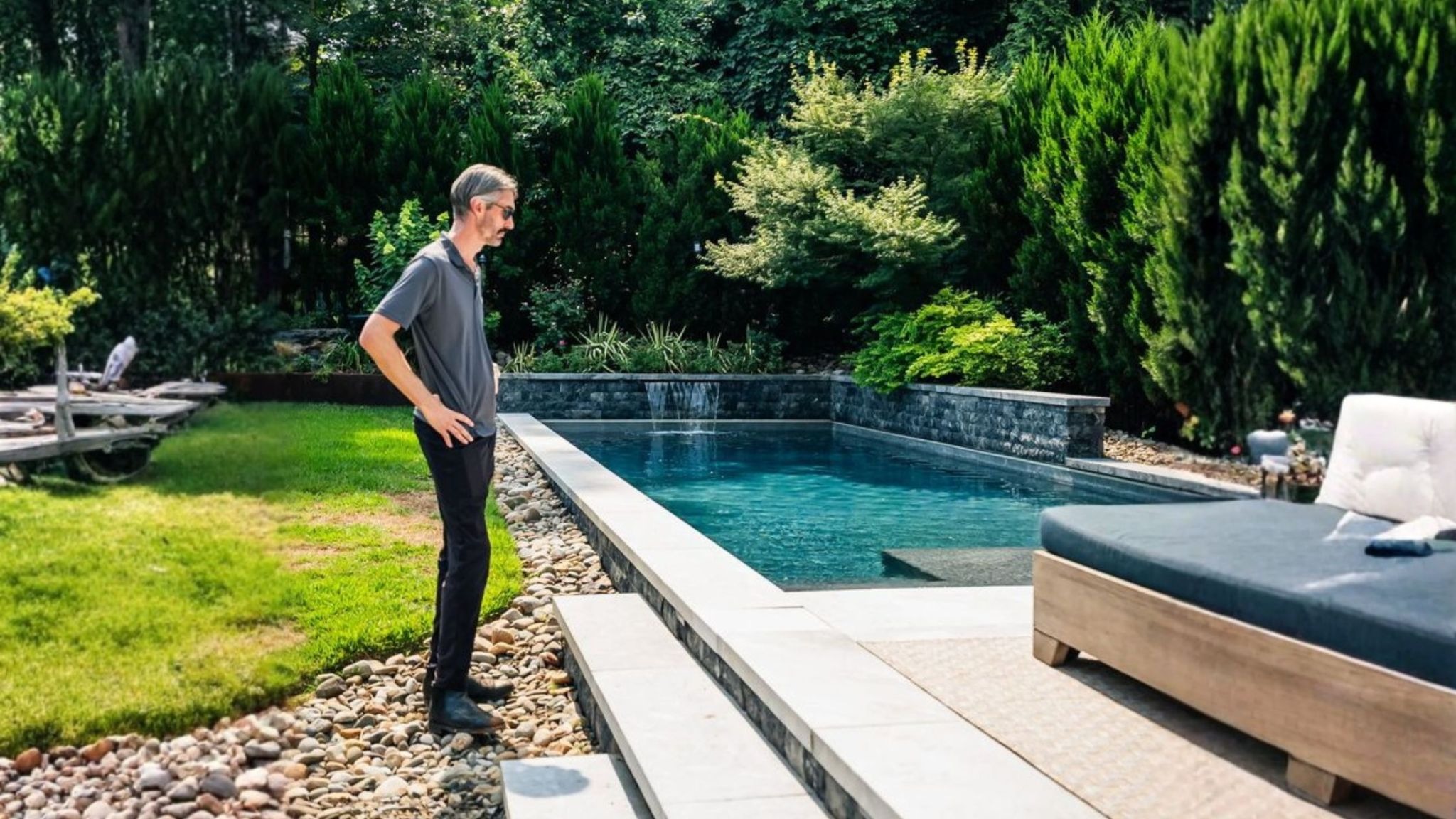
A design-build firm that plans your pool, patio, landscaping, and outdoor kitchen together gives you one point of contact and a finished result where everything works together visually and practically. You can read about how our process works and what to expect when you work with us on our about page.
8. The Most Common Mistakes Are Also the Most Predictable
After years of building pools throughout the Triangle, the same handful of mistakes come up again and again. Every one of them is avoidable:
• Skipping the HOA check before finalizing a design that then gets rejected by the Architectural Review Committee.
• Underestimating drainage on a sloped or clay-heavy lot, which turns into a much bigger cost mid-project.
• Choosing pool size and shape before confirming that heavy equipment can actually reach the backyard.
• Budgeting only for the pool, then being surprised by fencing, decking, and landscaping costs.
• Going with the lowest bid without checking what is actually included, which often leads to change orders that erase the savings.
• Starting the process in spring, hoping to swim that same summer, and running into rain delays and a full builder calendar.
Every one of these has a simple fix: the right planning conversation before any ground gets broken. Take a look at our portfolio to see what the planning and building process looks like when it goes right from the start.
9. The Best Pool Projects Start With the Whole Backyard in Mind
The homeowners who end up happiest with their pool rarely thought of it as a single purchase decision. They thought about how their family actually uses the backyard, whether that is entertaining, relaxing outside, cooking, or sitting around a fire on a cool fall evening. Then they designed the whole space around that vision.
That is the philosophy behind everything we build at Currin Outdoor Living. Our luxury pool projects are designed alongside patios, outdoor kitchens, fire features, and landscape design from day one. The finished backyard feels intentional from every angle rather than assembled from separate pieces by different contractors.
You can see this approach in action across dozens of completed projects in our portfolio. And if you want to see what is possible for your own backyard, we are happy to start that conversation.
Ready to Start Planning?
Building a pool in Raleigh and Wake County rewards early planning, a realistic budget, and a builder who actually understands local soil, permitting, and HOA conditions. If you are ready to talk through your project, request a free consultation with our team. You can also call us directly at (919) 234-7888.
We serve homeowners across Raleigh, Cary, Apex, Chapel Hill, Wake Forest, Holly Springs, and the greater Triangle. Visit our service areas page to see whether your neighborhood is in our coverage area.
Frequently Asked Questions
How long does it take to build a custom pool in Raleigh, NC?
Most custom concrete pool projects take two to four months from groundbreaking to completion. Fully custom builds with retaining walls, extensive hardscape, or an integrated outdoor kitchen can run longer. Fiberglass and vinyl pools generally install faster. Add time upfront for design and permitting, which is why starting in the fall or winter gives you the best shot at swimming by early summer.
Do I need to check with my HOA before building a pool?
Yes, in almost every planned community in the Raleigh area. Most associations require Architectural Review Committee approval before you build. Checking your HOA's governing documents and getting approval before finalizing a design saves significant time and prevents costly redesigns. Our team works with HOA requirements regularly and can help you navigate the process.
What is the best time of year to build a pool in Raleigh?
Fall and winter are generally the best times to start a pool project in the Triangle. Builder schedules are more open, spring's heavy rains are not a factor during the early phases, and you are positioned to be swimming before peak season begins. If you want to be in the water by Memorial Day, the design and contract process should ideally start the fall before.
How much does a custom pool cost in the Raleigh area?
Pricing depends heavily on size, material, site conditions, and features. A premium custom concrete pool with quality hardscape, fencing, and finishes is typically a six-figure investment. Complex lots with retaining walls or extensive drainage work can push costs higher. We walk through a clear and itemized budget during our design process so there are no surprises. Request a free estimate to get project-specific numbers for your backyard.
Does Wake County's clay soil really affect pool construction?
Yes. Clay-heavy soil, which is common throughout Wake County, drains slowly and can shift over time. That makes engineered drainage and, on sloped lots, retaining walls essential parts of a well-built pool rather than optional upgrades. A builder who is familiar with local soil conditions designs for this from the very beginning.
Can I build a pool on a sloped backyard in Raleigh?
In most cases, yes. Raleigh's rolling topography means many backyards have some grade, and a well-engineered retaining wall or terraced design can turn a sloped lot into a striking multi-level outdoor living space. It does add engineering and cost to the project, which is why this should be part of your budget conversation early.
Does Currin Outdoor Living handle the full backyard, not just the pool?
Yes. We are a design-build firm that plans your pool alongside your patio, outdoor kitchen, fire features, and landscaping as one complete project with a single point of contact from initial design through the final build. You can learn more about how we work on our process page, or browse completed projects in our portfolio.
What areas does Currin Outdoor Living serve?
We are based in Raleigh, NC and serve homeowners across Wake County and the greater Triangle. That includes Cary, Apex, Chapel Hill, Wake Forest, Holly Springs, Morrisville, Garner, Fuquay-Varina, Knightdale, Brier Creek, North Hills, Inside the Beltline, and surrounding communities. Visit our service areas page for the full list.

