


Got a small backyard in Raleigh and still want a pool? Good news. You don't need a huge lot to fit one in. The right shape can turn a tight space into a full outdoor living area.
The Real Problem With Small Backyard Pools
Most small yards run into the same three problems. There's not enough room to swim laps, there's awkward leftover space around the pool, and the whole layout feels cramped instead of relaxing. Picking the wrong pool shape makes all of these problems worse, even if the finish looks nice. A pool that's too big for the yard eats up your patio space fast. And a poorly placed pool can block walking paths, waste corners you can't use, or leave you with almost no room to sit.
Signs Your Backyard Needs a Compact Pool Shape
Not sure if you actually need a smaller, space-saving shape? These are the most common signs:
- Your yard is narrow, long, or an odd shape instead of a clean rectangle
- You have mature trees, a septic tank, or utility lines you can't move
- You still want room left over for a patio, grill, or seating area
- Privacy fences or neighboring homes limit how wide the pool can be
- You want a pool mainly for relaxing, not for laps or big parties
If a couple of these sound like your yard, a smaller pool like a plunge pool, spool, or L shaped pool will probably work better than a big traditional one.
Rectangular Pools Work Best for Tight Lots
A simple rectangle is one of the smartest choices for a small backyard. It uses every inch of space efficiently and pairs easily with a patio, without wasting room on curves you can't actually use. Rectangular pools also feel bigger than they are. Straight lines create a clean visual flow that makes a small yard look more open instead of more crowded. They're also easier to plan a patio, deck, or fence line around, since everything lines up in straight, predictable edges. If you want the most swimmable water for the least amount of yard space, our pool design team usually points homeowners toward this shape first.
Plunge Pools Solve the Space Problem Completely
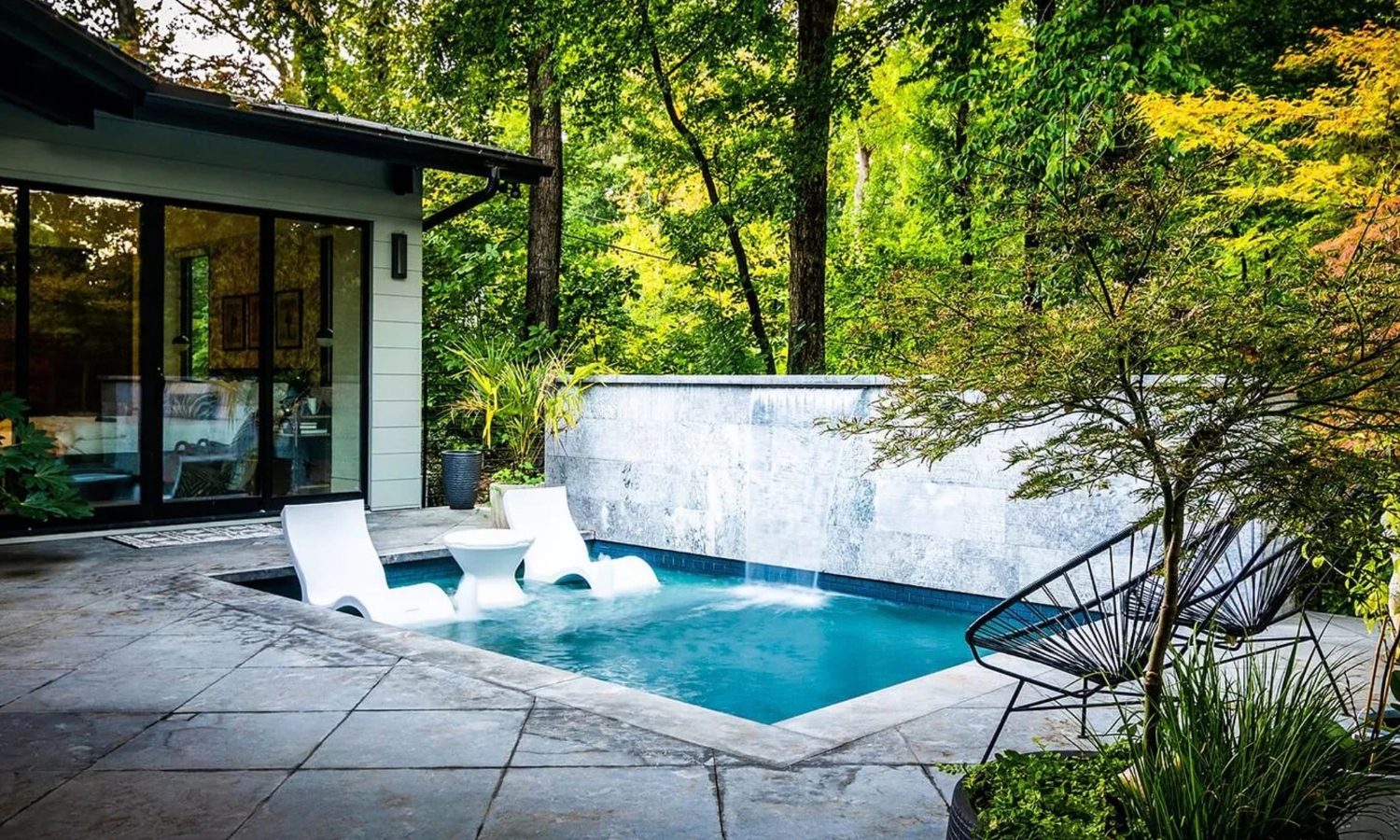
If your yard is really tight, a plunge pool might be the answer. It's just a small, deep pool built for cooling off and relaxing, not for swimming laps. Plunge pools take up a fraction of the space a traditional pool needs, which makes them perfect for townhomes, in town Raleigh lots, or backyards with mature trees you don't want to remove. They're also faster to install and cheaper to heat, since there's simply less water to manage. A lot of homeowners are surprised how luxurious a small plunge pool can feel once it's paired with nice decking, lighting, and a few plants around the edge.
L Shaped Pools Fix Awkward Yard Corners
Got an oddly shaped backyard? An L shaped pool can work with your layout instead of against it. It lets you fit a pool around a patio, deck, or garden bed without forcing things to line up perfectly. This shape also gives you two separate spots, one for lounging and one for swimming. That's great for families who want both without needing a bigger yard. It's also a smart choice if you have a septic tank, utility box, or tree in the way. Instead of fighting the obstacle, the L shape just bends around it.
Spools Give You a Pool and a Spa in One
A spool is a small pool that acts like an oversized spa. It solves the common problem of wanting both a pool and a hot tub but not having room for two separate features. These are becoming really popular in the Raleigh area right now because they fit small backyards, cost less to run, and still deliver that full outdoor living feel homeowners want. Many spools are built with a raised edge or spillover design, which adds a nice visual feature even in a compact space.
How Pool Shape Affects Your Overall Backyard Design
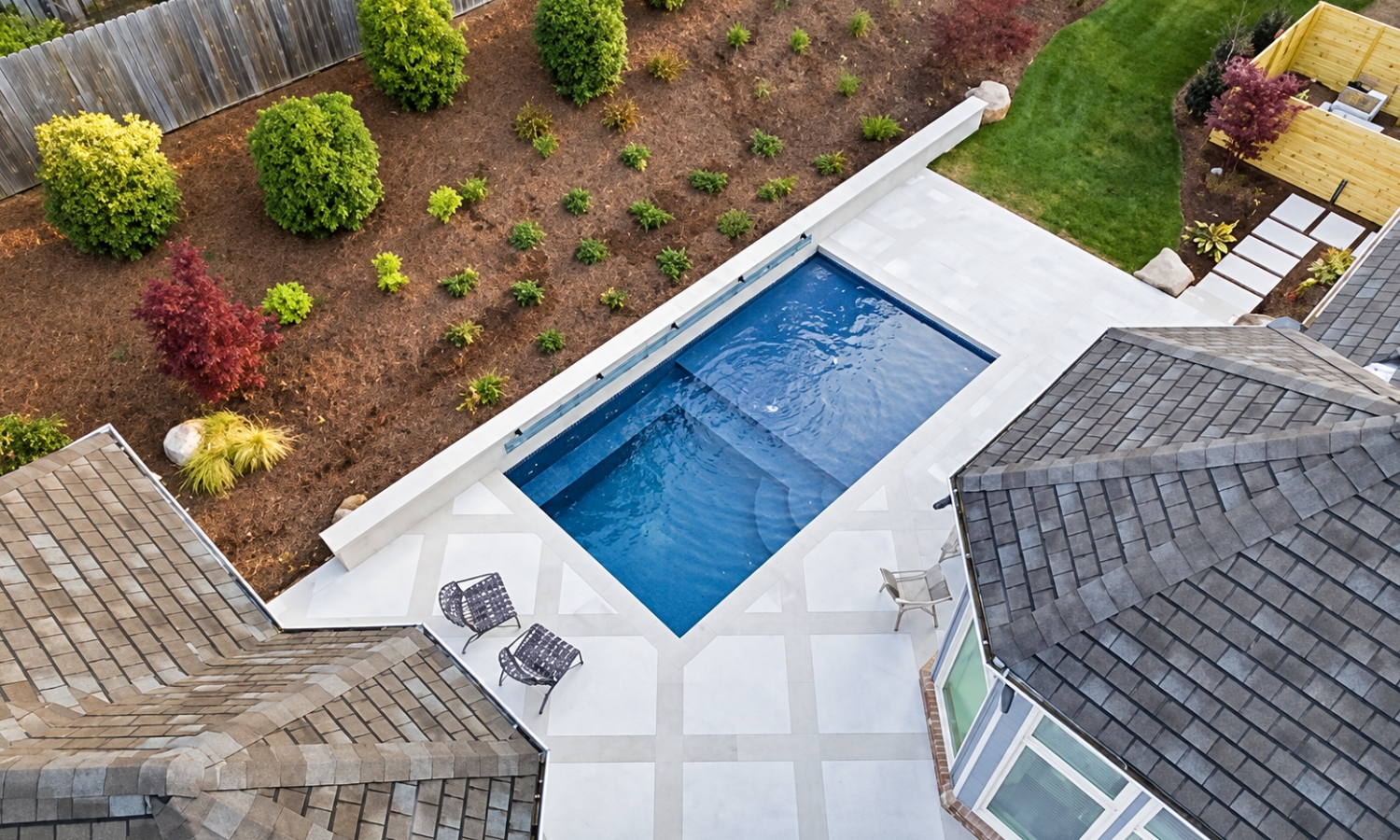
Choosing a shape isn't only about the water. It affects where your patio goes, how much room is left for seating, and whether you can still fit an outdoor kitchen or fire pit down the road. A shape that looks great on paper can still leave you short on usable space once you add walkways, planting beds, and a place to actually sit. This is exactly why a full design plan matters before construction starts. A 3D rendering shows you how the pool shape, patio, and landscaping all work together as one space, so you can catch these issues early instead of after the concrete is poured.
How Deep Should a Small Backyard Pool Be
Depth matters just as much as shape when your yard is tight. A lot of homeowners assume they need a deep end for diving, but most small pools skip that entirely to save space. A consistent depth of around four to five feet works well for lounging, cooling off, and light swimming. If you have kids, an even shallower design with a small tanning ledge near the entry can make the pool feel safer for the whole family.
Decking and Patio Options That Save Space
The space around the pool matters just as much as the pool itself, especially when your yard is tight. A narrow paver deck around the edge often works better than a big patio, since it still gives you a safe place to walk without taking up more yard space. Built in bench seating along the pool edge is another smart move. It gives you a place to sit without needing extra furniture.
Landscaping Ideas That Make a Small Pool Feel Bigger
The right plants and layout can make even a compact pool feel like a private resort. Tall, narrow plants along the fence line add privacy without crowding the yard. Keeping beds low near the pool edge and taller near the property line creates a layered look that draws the eye outward instead of inward. Our landscape design team can help plan this out so the greenery works with your pool space instead of closing it in.
Common Mistakes Homeowners Make With Small Pools
A few mistakes come up again and again with tight backyard pool projects:
- Choosing a shape based on looks alone instead of the actual yard layout
- Skipping a 3D rendering and being surprised by the final space
- Forgetting to plan for a patio, seating, or walkway before picking pool size
- Not checking HOA rules or setback requirements before finalizing a design
- Ignoring drainage, which is a common issue with Raleigh's clay soil
Catching these early during the design phase saves a lot of frustration once construction starts.
Permits and HOA Rules for Small Pools in Raleigh
Before any shovel goes into the ground, most Raleigh area homeowners need to deal with permits and, in a lot of neighborhoods, HOA approval. Wake County requires permits for pool construction, and setback rules often affect placement on a small lot. Our guide on pool permits in Wake County walks through everything required before construction starts.
Maintenance Differences Between Pool Shapes
Shape doesn't just affect how a pool looks, it also affects upkeep. Smaller shapes like plunge pools and spools usually cost less to heat and treat with chemicals, simply because there's less water to deal with. Rectangular pools are also the easiest to clean, while freeform shapes need a bit more care. Not sure which shape makes the most sense for your upkeep needs? Reach out to us and we can walk you through it.
Frequently Asked Questions
What is the best pool shape for a small backyard?
A rectangle or a plunge pool usually works best for small yards since both use space efficiently. Rectangles give you the most swimmable area, while plunge pools fit into really tight spots. The right choice depends on your yard size and how you plan to use the pool. Our pool design team can help you figure out which one fits best.
How much does a small pool cost in Raleigh, NC?
Cost depends on the shape, size, and features you choose, but smaller pools like plunge pools and spools generally cost less than large traditional pools. You can get a full breakdown in our guide on how much a pool costs in Raleigh, NC. The only way to get an exact number is a design consultation based on your yard.
Do I need a permit to build a small pool in Wake County?
Yes, most pools in Wake County require a permit, even smaller ones like plunge pools and spools. Setback rules also apply, which can affect placement on a tight lot. Our guide on pool permits in Wake County walks through what's required before construction starts.
Can you build a pool in a really small backyard?
Yes, even narrow side yards or compact lots can usually fit a pool with the right design. Plunge pools and spools are built specifically for tight spaces where a traditional pool wouldn't work. Our pool design team can show you exactly what fits your lot.
How long does it take to build a small pool?
Smaller pools like plunge pools and spools generally take less time to build than large traditional pools since there's less excavation and water to manage. Most small pool projects move from design to completion faster than full backyard renovations. Timelines still depend on permits, weather, and site conditions. Want a clearer idea for your own yard? Contact us and we'll walk you through it.
Is a plunge pool worth it for a small yard?
Yes, plunge pools are a popular choice because they cost less to build, heat, and maintain compared to larger pools. They still deliver that outdoor living feel without needing a big lot. Many homeowners pair them with nice decking and lighting for a resort style look, something our outdoor living designs are built around.
What size pool fits a small backyard?
There's no single size that fits every yard since it depends on shape, obstacles, and how much patio space you want to keep. A plunge pool can fit in as little as a narrow side yard, while a small rectangle needs a bit more room. A free consultation is the easiest way to see what actually fits your space.

